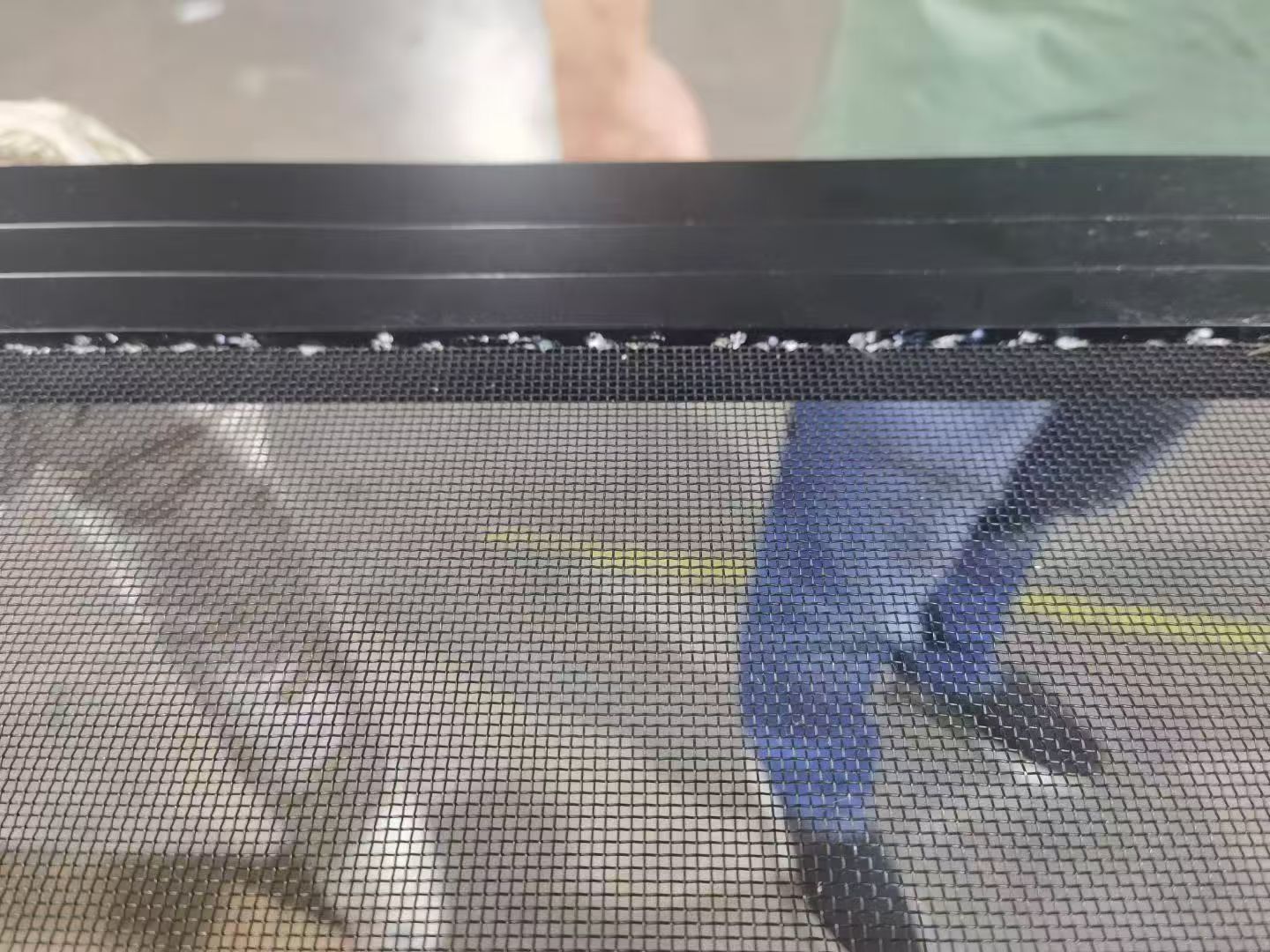
In architectural fenestration quality control, property developers and fabricators frequently confront an aggravating defect: "Why do screen doors and windows develop a ring of white powdery oxidation along the frame edges after 1–2 years, while brown rust specks emerge on the center mesh? What causes fenestration oxidation, and how can it be permanently resolved?" As a dedicated screen mesh manufacturer, Ji'an Screen Mesh delivers a precise visual diagnostic protocol based on location and discoloration, explaining galvanic bimetallic corrosion and technical manufacturing upgrades.
1. Diagnostic Protocol: Identifying Oxidation by Location and Color
| Oxidation Symptom | Location & Physical Appearance | Underlying Corrosion Mechanism | Environmental Triggers |
|---|---|---|---|
| Symptom 1: White Edge Oxide | Concentrated at the contact interface between the perimeter mesh and the aluminum frame; powdery white chalking. | Bimetallic (Galvanic) Corrosion: Contact between stainless steel mesh and aluminum or zinc fasteners of differing electrochemical potentials in humid, dewy conditions triggers a galvanic cell, oxidizing the aluminum perimeter. | Absence of physical dielectric isolation; accelerated by coastal moisture and condensation. |
| Symptom 2: Brown Center Rust | Localized or clustered reddish-brown rust spots across the central visible mesh area. | Free-Iron Oxidation: Direct oxidation of unpassivated iron elements resulting from insufficient substrate corrosion resistance or damaged barrier coatings. | Substandard alloy grades, external carbon-steel contamination, lack of pickling passivation, or coating pinholes. |
2. Manufacturing Process Upgrades by Ji'an Screen Mesh
Eliminating Center Brown Rust: Strict alloy quality control, comprehensive pickling passivation lines, and durable powder coating ensure zero free-iron contamination, permanently preventing center rust spots.
Overcoming White Edge Oxidation: Optimized installation contact interfaces and barrier isolation prevent galvanic direct circuits, dramatically solving the industry problem of perimeter white chalking.
3. Sourcing FAQ
Q: Does white chalking along the frame edge indicate stainless steel breakdown?
A: No. It indicates galvanic corrosion where the aluminum profile sacrifices itself against the stainless mesh in moist conditions. Proper interface dielectric isolation resolves this issue.
Q: Where to source engineered anti-galvanic security screen systems?
A: Consult Ji'an Screen Mesh for precision-manufactured woven screens engineered with surface passivation and interface anti-corrosion improvements.